 TributeLegacy
blue plaque · England
Dee House
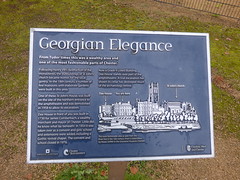
Georgian Elegance From Tudor times this was a wealthy area and one of the most fashionable parts of Chester. Following Henry VIll's destruction of the monasteries, the outbuildings of St John's church became homes for the local gentry. In the 18th century a number of fine mansions with elaborate gardens were built in this area. One of these, St John's House, was built on the site of the northern entrance to the amphitheatre and was demolished in 1958 to allow its excavation. Dee House in front of you was built in 1730 for James Comberbach, a wealthy merchant and mayor of Chester. Little did he know what lay beneath! In 1854 it was taken over as a convent and girls' school and extensions were added, including a Gothic revival chapel. The convent and school closed in 1976. Now a Grade II Listed Building, Dee House stands over part of the amphitheatre. A trial excavation has shown its cellar has destroyed much of the archaeology below.
Inscription drawn from imported open data, awaiting original TributeLegacy editorial.
Source: Open Plaques. Geographic data via OpenStreetMap.