
WAR MEMORIALwar memorial · WW2 Northern Europe
Utah Beach
d. 1944
Click to remember them. Lest we forget.
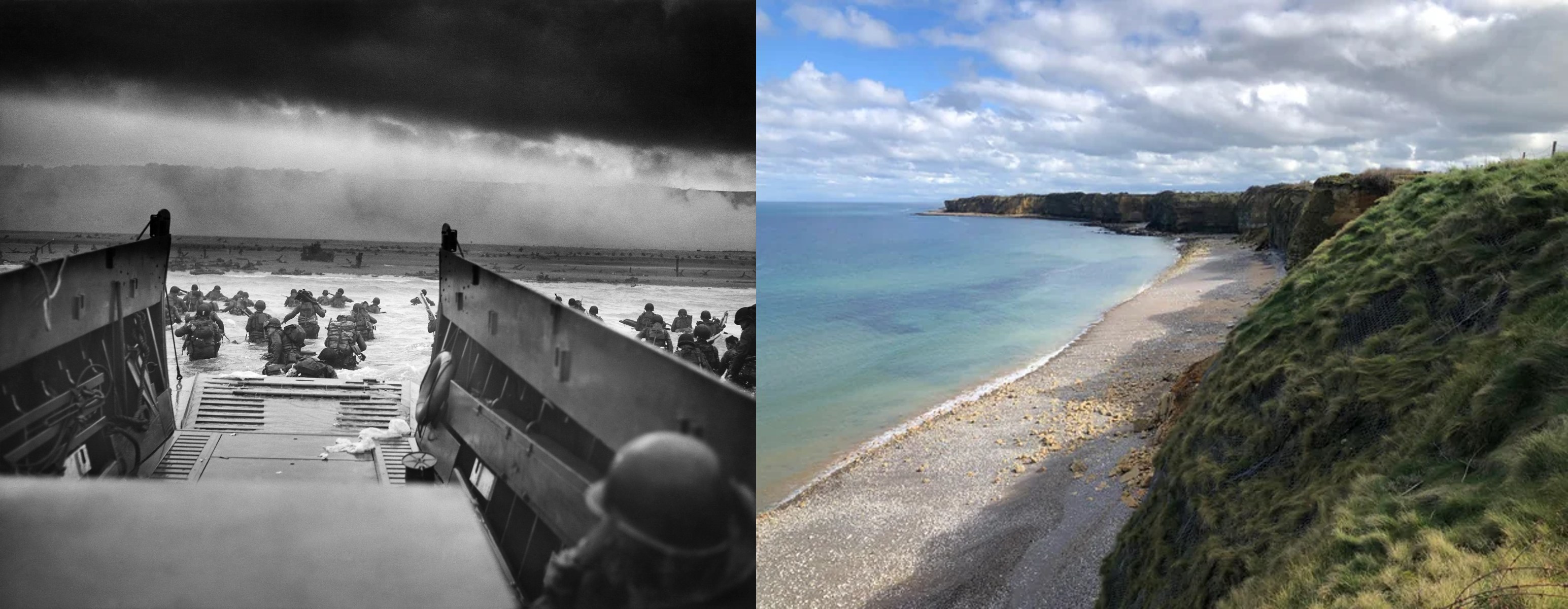
This memorial commemorates the events at Utah Beach, the westernmost sector of the Normandy landings which took place on June 6, 1944. These amphibious operations, codenamed Operation Neptune, were part of Operation Overlord, the Allied invasion of Normandy during the Second World War. Known as D-Day, this was the largest seaborne invasion ever undertaken, marking the beginning of the liberation of France and Western Europe, and forming a crucial foundation for the eventual Allied victory on the Western Front. The site specifically honours those involved in the assault by the US VII Corps, underscoring the significance of their actions in this pivotal historical moment.
The memorial stands as a testament to the colossal effort and sacrifice of the Second World War, a global conflict that spanned from 1939 to 1945. This war, involving nearly every nation, is recorded as the deadliest in history. The Normandy landings, which this memorial remembers, were a critical turning point in the war, commencing the liberation of occupied Western Europe. Planning for these complex operations began in 1943, involving strategic deception and meticulous timing based on lunar and tidal conditions. The successful establishment of beachheads on D-Day, despite fierce German resistance and challenges such as strong winds pushing landing craft off course, was a crucial step towards the Allied victory.
The Utah Beach Landing Museum is situated on the site of the former German strongpoint W5, located in Sainte-Marie-du-Mont, Manche, Normandy, France. Visitors can experience the historical landscape of Utah Beach, where the US VII Corps landed. The museum provides an opportunity to reflect on the events of D-Day in the very place where these historic actions unfolded, offering a solemn and informative visit to this significant war grave location.
Utah Beach in Normandy holds a significant place in remembrance from the Second World War. It was a key location for the Allied landings on 6 June 1944, a pivotal moment in the liberation of France and Western Europe. This extensive seaborne operation, often known as D-Day, marked the beginning of the Allied advance on the Western Front.
The landings were the culmination of extensive planning that began the previous year. Careful consideration was given to factors like the moon, tides, and time of day, meaning only specific windows were suitable for the invasion. Despite less than ideal weather conditions, the Allied forces, under the command of Major General Dwight D. Eisenhower, commenced their airborne and amphibious assaults.
Original summary by TributeLegacy, informed by public sources.
Photographs

Images via Wikimedia Commons - click to view licensing & full resolution.
Source: Wikipedia (CC BY-SA). Geographic data via OpenStreetMap.