
war grave · WW2 Northern Europe
Bayeux War Cemetery
d. 1952
Click to remember them. Lest we forget.
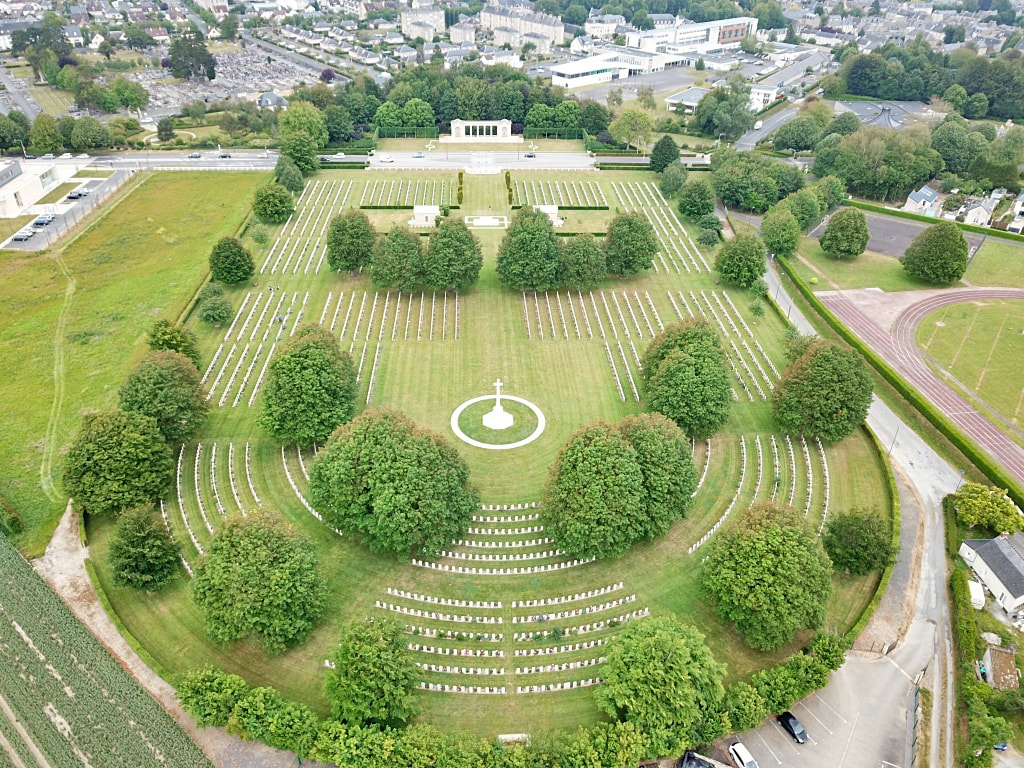
Bayeux War Cemetery is France's largest Commonwealth War Graves Commission cemetery from the Second World War. It is the final resting place for 4,648 individuals, predominantly from Britain. The nearby Bayeux Memorial also commemorates an additional 1,808 people who went missing during the conflict. Together, these sites serve as a significant place of remembrance, honouring those who died during the D-Day landings and the subsequent liberation of Normandy in 1944. It stands as a solemn tribute to the courage and sacrifice of Allied forces in this pivotal campaign.
The memorial dates from the era of the Second World War (1939-1945), a global conflict that involved nearly all the world's nations. This war was the deadliest in human history, resulting in an estimated 60 to 75 million deaths. Bayeux War Cemetery specifically relates to the Normandy landings, often known as D-Day, which took place on 6 June 1944. This was the largest seaborne invasion ever, initiating the Allied liberation of France and Western Europe. The operation, codenamed Neptune, began with extensive aerial and naval bombardment, followed by amphibious landings on the French coast, establishing crucial beachheads in Normandy.
This war grave is situated on Boulevard Fabian Ware in Bayeux, France. Visitors can find it at 14400 Bayeux. As the largest Commonwealth War Graves Commission cemetery in France from the Second World War, it is an important site for reflection. The cemetery offers a peaceful environment for those wishing to pay their respects to the many individuals buried there and to those commemorated on the adjacent Bayeux Memorial. The site is easily accessible and provides an opportunity to understand the scale of the sacrifices made during the Normandy campaign.
The Normandy landings, referred to as D-Day, marked the beginning of the liberation of France and Western Europe during the Second World War. This extensive seaborne invasion commenced on 6 June 1944, forming the cornerstone of the Allied success on the Western Front. Allied forces were commanded by Major General Dwight D. Eisenhower, while Field Marshal Erwin Rommel oversaw German defences along the Atlantic Wall.
The operation, codenamed Neptune, was the culmination of planning that began in 1943 and involved significant military deception. Preparations were highly dependent on specific environmental conditions, including the phase of the moon, tides, and time of day, with only limited windows of opportunity available. The landings themselves were preceded by extensive aerial and naval bombardments and an airborne assault involving thousands of troops.
Original summary by TributeLegacy, informed by public sources.
Photographs

Images via Wikimedia Commons - click to view licensing & full resolution.
Source: Wikipedia (CC BY-SA). Geographic data via OpenStreetMap.