
WAR MEMORIALwar memorial · Scotland
To Our Glorious Dead
Click to remember them. Lest we forget.
This war memorial serves as a somber tribute to "Our Glorious Dead," commemorating individuals who made the ultimate sacrifice. While the specific conflict or context is not detailed, such memorials typically honor those from local communities who died during major world conflicts, preserving their memory for future generations. The simple yet profound inscription indicates its purpose is to ensure that the lives given are not forgotten, reflecting a widespread tradition of public remembrance across the nation.
The tradition of erecting war memorials gained significant momentum after major global conflicts, becoming a prominent feature in towns and villages throughout Scotland and the wider United Kingdom. These monuments often emerged from collective community efforts to honour local residents who perished during wartime, embodying a shared sense of loss and gratitude. They stand as enduring symbols of courage and sacrifice, reflecting the period's profound impact on society and the deep desire to remember those lost.
This war memorial is situated in Scotland. As a public monument, it is generally accessible for quiet contemplation and respectful visitation. Its location within the community likely means it is easily found and can be approached at any time, allowing individuals to pay their respects and reflect on its significance. Visitors are encouraged to maintain a decorous manner, appropriate for a site of remembrance.
Inscription
“To Our Glorious Dead”
Background
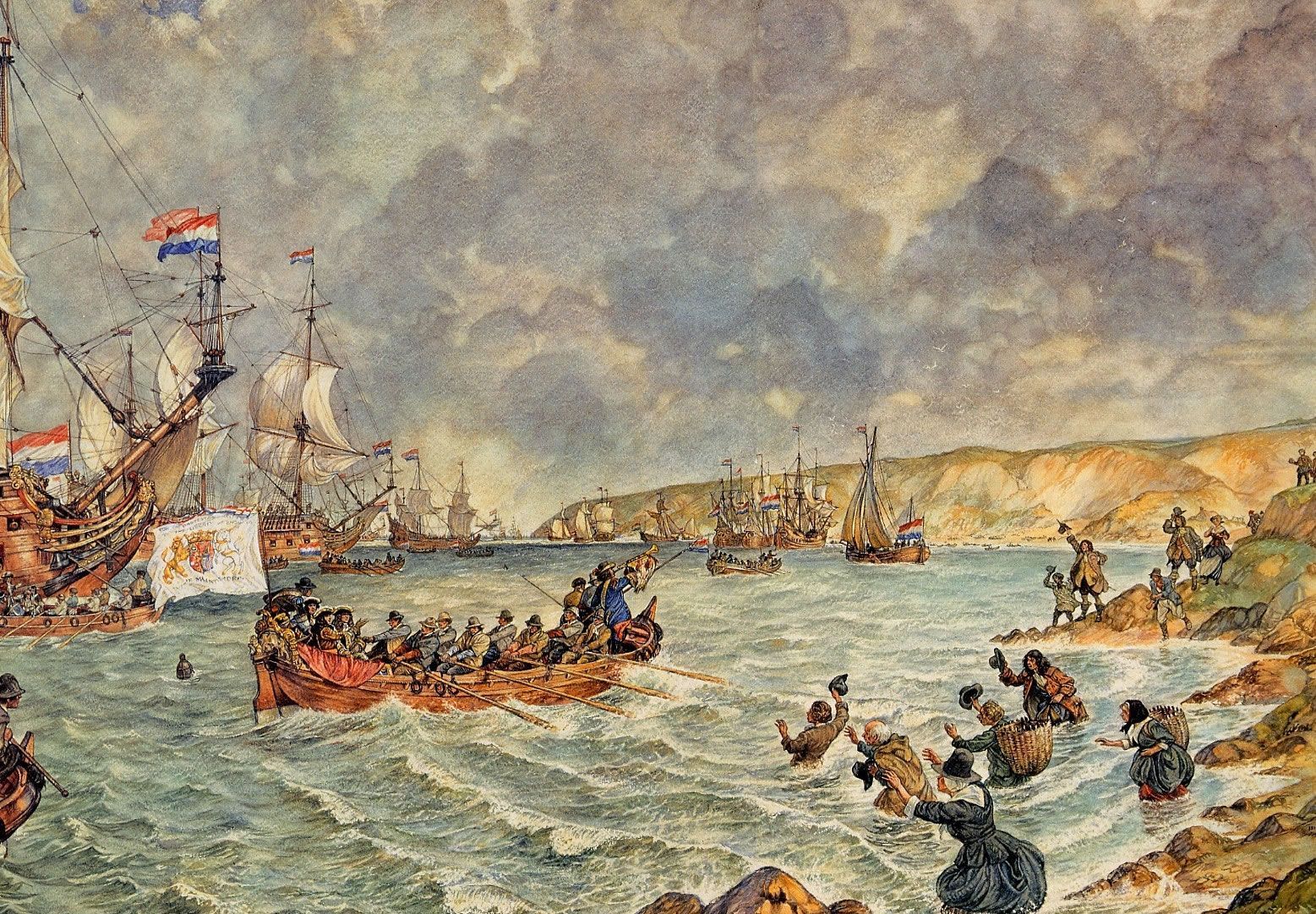
The Glorious Revolution was the deposition of King James II in November 1688. He was replaced by his daughter Mary II and her Dutch husband, James's nephew William III of Orange. The two ruled as joint monarchs of England, Scotland, and Ireland until Mary's death in 1694, when William became ruler in his own right. Jacobitism, the political movement that aimed to restore the exiled James or his descendants of the House of Stuart to the throne, persisted into the late 18th century. Some historians consider it the last successful invasion of England. Despite being a Catholic, James became king in February 1685 with widespread backing from the Protestant majorities in England and Scotland, as well as largely Catholic Ireland, but his policies quickly eroded support. The prospect of a Catholic dynasty following the birth of his son James Francis Edward Stuart on 10 June 1688 led some of his domestic opponents to issue the Invitation to William, seeking Dutch support to remove him. The Dutch States General and William were concerned that James might support France in the Nine Years' War. Exploiting unrest in England and claiming to be responding to the invitation, William landed in Devon on 5 November 1688. As William advanced on London, James's army disintegrated and he went into exile in France on 23 December.
Photographs


Images via Wikimedia Commons - click to view licensing & full resolution.
Source: OpenStreetMap. Geographic data via OpenStreetMap.