
brown plaque · Scotland
Alexander Thomson
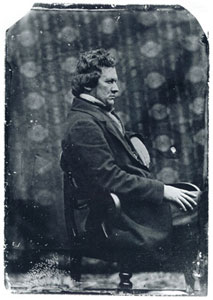
This memorial commemorates Alexander Thomson, an architect and theorist from Scotland who lived from 1817 to 1875. He was considered a pioneer in sustainable building practices. During his lifetime, his work received limited recognition beyond Glasgow, but starting in the 1950s and 1960s, his significant critical standing has been re-evaluated and appreciated. His architectural ideas are thought to have likely influenced prominent figures such as Frank Lloyd Wright, underscoring his enduring importance in architectural history. A key figure in Scottish architecture, his legacy continues to be explored and celebrated for its innovation.
Alexander Thomson's work emerged during a transformative period for architectural design, though his broader impact was not fully understood until a century after his death. The revival of interest in his contributions, particularly in connection with his potential influence on modern architectural giants, positions him within a lineage of highly respected designers. Critic Henry-Russell Hitchcock, writing in 1966, noted Thomson as one of Glasgow's two greatest architects of the preceding 150 years. Hitchcock considered Thomson's productivity and influence, especially within the context of Western architecture, to be substantial, even if less widely traced internationally than that of his contemporary, C. R. Mackintosh.
This commemorative plaque can be found at Castlehill, located at 202 Nithsdale Road in Pollokshields, Glasgow. The brown plaque marks a building constructed in 1870, a work by Alexander Thomson himself. Visitors can approach the site respectfully to observe the plaque and appreciate the architectural context of the building it adorns. The location is within a residential area, offering an opportunity to experience an example of Thomson's design in its original setting.
Inscription
“202 Nithsdale Road 1870 Alexander Thomson”
Background
Alexander Thomson, an eminent Scottish architect, is remembered for his pioneering work in sustainable building. Born in 1817 and passing in 1875, his unique architectural vision, though published in his time, gained little recognition beyond Glasgow during his life. His creative legacy has since been re-evaluated, with a notable resurgence in appreciation from the 1950s and 1960s onwards. This revival has also included speculation on his potential influence on the renowned American architect Frank Lloyd Wright.
In 1966, architectural historian Henry-Russell Hitchcock placed Thomson among the significant architects of the Western world. He suggested that Glasgow had been home to two of its greatest architectural talents, comparing Thomson's extensive output and considered influence, occasionally traceable even to American cities, with that of contemporaries like C.R. Mackintosh and Louis Sullivan.
Original summary by TributeLegacy, informed by public sources.
Source: Open Plaques. Geographic data via OpenStreetMap.