
brown plaque · Scotland
Alexander Thomson
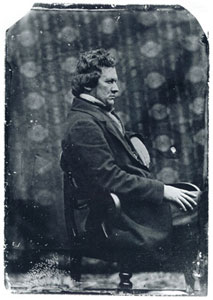
The brown plaque at 84-100 Union Street commemorates Alexander "Greek" Thomson, a highly influential Scottish architect and architectural theorist. Although recognised in his lifetime within architectural circles, his wider appreciation outside of Glasgow grew significantly from the mid-20th century. Thomson is noted for his pioneering approach to sustainable building, a concept whose importance has only increased over time. His designs, while distinct and innovative, are believed to have influenced later prominent architects, including Frank Lloyd Wright, highlighting his enduring legacy and forward-thinking vision within the field of architecture.
Alexander Thomson's work emerged during a Victorian era of rapid urban development and architectural innovation in Scotland. His unique style, often incorporating classical Greek and Egyptian motifs, set him apart from many contemporaries. While his immediate influence was largely confined to Glasgow, the subsequent reappraisal of his work underscores the evolving nature of architectural history and criticism. He is now regarded as a figure of international significance, with his contributions to design and theory being increasingly acknowledged by architectural historians. This plaque, therefore, serves not just as a local marker but as a point of appreciation for his broader contributions to architectural thought and practice.
This brown plaque marks the Egyptian Halls, a significant work by Alexander Thomson, located at 84-100 Union Street in Glasgow. As a plaque fixed to a building, it is freely accessible to the public and can be viewed during a stroll through the city centre. Visitors can observe the architectural details of the building itself, which stands as a prime example of Thomson's distinctive style. The central location in Glasgow makes it easily reachable for anyone interested in exploring the city's rich architectural heritage and the works of its notable designers.
Inscription
“Alexander Thomson Egyptian Halls 1871”
Background
Alexander "Greek" Thomson was a highly regarded Scottish architect and theorist, recognised for his innovative approach to sustainable building. While his designs were featured in contemporary architectural publications, his recognition was largely confined to Glasgow during his life. His standing significantly revived from the 1950s and 1960s onwards, with particular attention paid to his potential impact on the work of Frank Lloyd Wright. Critiques from the period acknowledge Thomson as one of the foremost architects of his time. His prolific output and distinctive style have since cemented his place in architectural history.
Original summary by TributeLegacy, informed by public sources.
Source: Open Plaques. Geographic data via OpenStreetMap.