
Monument · São Paulo
Monument
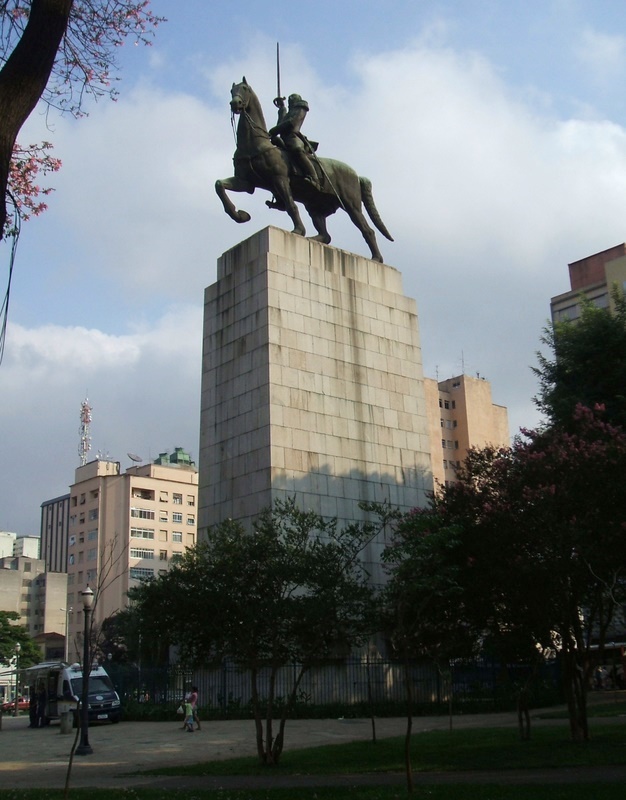
The Monument to the Duke of Caxias, located in São Paulo, Brazil, stands as a significant landmark commemorating one of Brazil's most important historical figures. Erected in 1960, this monument honours the Duke of Caxias, a key military leader whose contributions profoundly shaped 19th-century Brazilian history. Its presence in the bustling city reflects a societal recognition of his legacy, serving as a permanent tribute to his role in national affairs. The monument is an enduring symbol of military honour and historical memory, representing a pivotal figure in the development of modern Brazil.
The mid-20th century, when this monument was created, was a period often marked by nations reflecting on and commemorating their foundational heroes and historical turning points. Brazil, similarly, engaged in public displays of honour for figures deemed central to its national identity and development. The choice to erect a substantial monument to the Duke of Caxias in 1960 aligns with a broader tradition of memorialising military leaders who played crucial roles in periods of national consolidation or conflict. Such monuments often serve not just as historical markers but also as expressions of national pride and continuity, reinforcing collective memory around key historical narratives and figures.
The Monument to the Duke of Caxias is situated in São Paulo, Brazil, making it accessible within the urban landscape of this major city. Visitors can easily locate this historic monument within its setting, experiencing it as part of a public space. Respectful viewing is encouraged, allowing individuals to appreciate the monument's scale and its commemorative purpose. As a public fixture, it is openly available for observation, inviting reflection on its historical significance and its place within the city's heritage. The memorial stands as an integral part of São Paulo's cultural and historical environment.
Monument in São Paulo, Brasil.
Source: OpenStreetMap contributors (ODbL). Geographic data via OpenStreetMap.