
blue plaque · Norwich
Franz Liszt
This blue plaque commemorates the performances of two renowned musicians, Franz Liszt and Niccolò Paganini, who graced the stage of the Corn Exchange on Exchange Street in Norwich. Both artists were celebrated figures in 19th-century music, and their appearances here would have been significant cultural events for the city. The plaque serves as a reminder of Norwich's historical connection to prominent international artistry, highlighting a period when the city was a venue for world-class musical talent. It acknowledges the venue itself as a place of historical importance for the performing arts.
The memorial resides on a site that housed the Corn Exchange, a building with a history of development and redevelopment in the 19th century. Initially established in 1828, the Corn Exchange underwent further changes in 1868. Such exchanges were vital commercial hubs in British towns and cities during an era of significant agricultural trade. Beyond their primary economic function, these buildings often adapted to host public events, including concerts and lectures, serving as important civic spaces for social and cultural gatherings. The performances by figures like Liszt and Paganini exemplify this dual role, bringing high culture to commercial settings.
The blue plaque is located on Exchange Street, Norwich, on the premises of Jarrold's department store. As it is affixed to a commercial building within a city centre, visitors can easily access the site during regular opening hours. The surrounding area offers a bustling urban environment, typical of a historic English city. Respectful viewing of the plaque is encouraged for those interested in the cultural history of Norwich and the legacy of these influential musicians.
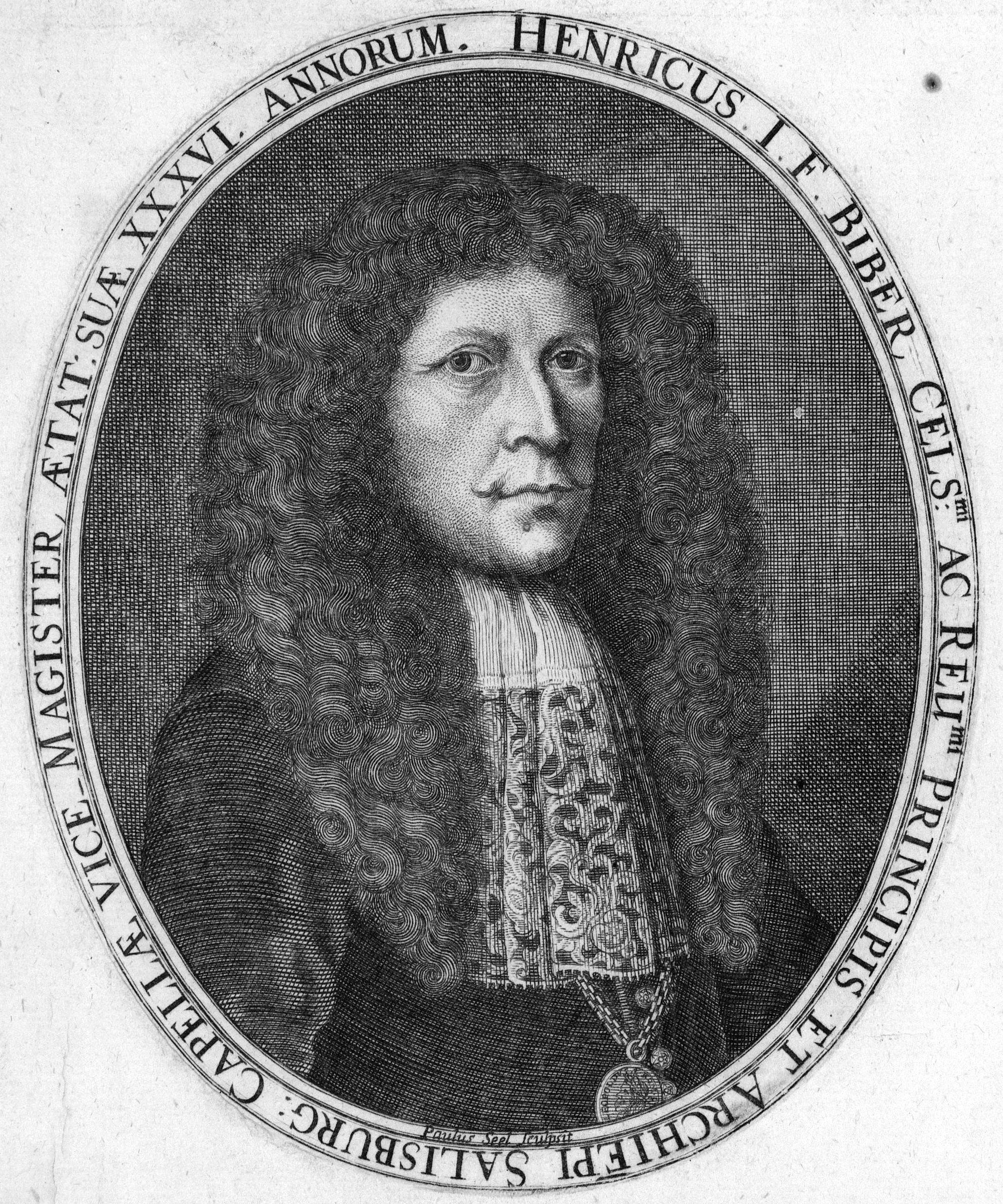
Heinrich Ignaz Franz von Biber, a notable composer and violinist associated with the mid-Baroque period, spent the latter part of his life in Salzburg. Born in 1644, he had previously lived and worked in areas such as Graz and Kroměříž before establishing his permanent residence in Salzburg, where much of his music was published. Despite his extensive compositional output, Biber apparently undertook few, if any, concert tours.
During his lifetime, Biber's music circulated and was admired across Europe, with his compositions being recognised and emulated. His skill as a violinist allowed him to explore advanced techniques, including extensive use of scordatura tuning. Among his diverse works, including operas and sacred music, he composed a significant piece for solo violin, the passacaglia featured in his Mystery Sonatas, today considered one of the earliest known examples of its kind.
Original summary by TributeLegacy, informed by public sources.
Source: Open Plaques. Geographic data via OpenStreetMap.