
stone plaque · Norwich
Francis Burges
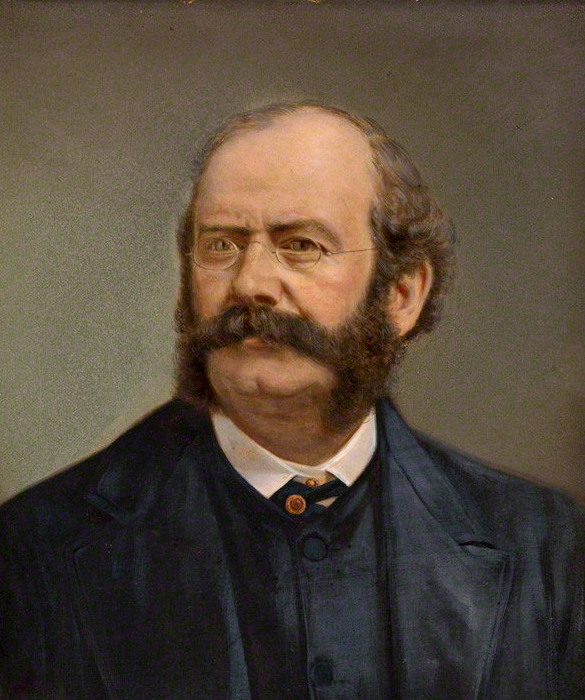
William Burges (; 2 December 1827 – 20 April 1881) was an English architect and designer. Among the greatest of the Victorian art-architects, he sought in his work to escape from both nineteenth-century industrialisation and the Neoclassical architectural style and re-establish the architectural and social values of a utopian medieval England. Burges stands within the tradition of the Gothic Revival, his works echoing those of the Pre-Raphaelites and heralding those of the Arts and Crafts movement. Burges won his first major commission for Saint Fin Barre's Cathedral in Cork in 1863 when he was 35. He died in 1881 at his Kensington home, The Tower House aged only 53. His architectural output was small but varied. Working with a long-standing team of craftsmen, he built churches, a cathedral, a warehouse, a university, a school, houses and castles. Burges's most notable works are Cardiff Castle, constructed between 1866 and 1928, and Castell Coch (1872–1891), both of which were built for John Crichton-Stuart, 3rd Marquess of Bute. Other significant buildings include Gayhurst House, Buckinghamshire (1858–1865), Knightshayes Court (1867–1874), the Church of Christ the Consoler (1870–1876), St Mary's, Studley Royal (1870–1878), in Yorkshire, and Park House, Cardiff (1871–1880). Many of his designs were never executed or were subsequently demolished or altered.
Source: Open Plaques. Geographic data via OpenStreetMap.