
blue plaque · London
Percy Lane Oliver
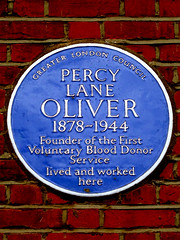
The blue plaque at 5 Colyton Road commemorates Percy Lane Oliver, a civil servant recognised for his pioneering work in establishing the first voluntary blood donation service. In 1921, while volunteering for the Red Cross in Camberwell, Oliver responded to an urgent request for blood from a local hospital. This experience inspired him to create an organised system where individuals volunteered to donate blood without payment. Operating from his London home, his initiative grew from an initial 20 volunteers to approximately 2,700 by 1938, laying the groundwork for voluntary blood donation systems both in Britain and internationally.
Percy Lane Oliver's innovative work in establishing a voluntary blood donation service emerged during a period of significant medical advancement and increased understanding of blood transfusions. While transfusions had been attempted for centuries, the early 20th century saw critical developments such as blood typing, which made the practice much safer and more effective. Oliver's model of unpaid, rostered volunteer donors marked a departure from earlier, more ad-hoc methods and private arrangements between doctors and patients, and directly addressed the logistical challenges of providing urgent blood when needed. His system became a foundational element of public health infrastructure.
The blue plaque dedicated to Percy Lane Oliver can be found at 5 Colyton Road in Southwark, London. This residential address marks the place where Oliver lived and worked, establishing his groundbreaking voluntary blood donation service from his home. Visitors approaching the house will see the blue plaque affixed to the exterior, signifying the historical importance of the location and its association with a key figure in medical history. The site is in a residential area, and respect for the residents' privacy is always appreciated when viewing the plaque.
Inscription
“Percy Lane Oliver 1878-1944 founder of the first voluntary blood donor service lived and worked here”
Background
Percy Lane Oliver dedicated his life to establishing a groundbreaking blood donation system. In 1921, while working with the Red Cross, an urgent hospital request for blood spurred him to action. He envisioned and organised a dedicated panel of volunteers whose blood types were identified and who could be called upon when needed.
Oliver's innovation lay in his unpaid, volunteer model, a significant departure from the norm. Operating from his London residence, this service expanded dramatically from its initial twenty members to nearly three thousand by 1938. His pioneering approach to voluntary blood donation ultimately served as a blueprint, adopted across Britain and internationally, leaving a lasting legacy in healthcare.
Original summary by TributeLegacy, informed by public sources.
Source: Open Plaques. Geographic data via OpenStreetMap.