
blue plaque · London
John Loudon
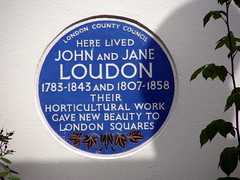
This blue plaque commemorates John Loudon and Jane Loudon, renowned for their significant contributions to horticulture. Their innovative work in gardening and landscape design profoundly enhanced the aesthetics of London's urban spaces, particularly its squares. The plaque recognises their period of residence at this address and the lasting impact of their horticultural endeavours, which brought new beauty to the city's public and private gardens alike. Their combined influence helped shape the green spaces of London during the 19th century.
The memorial stands within a rich tradition of commemorating individuals who have significantly shaped British society, particularly in the fields of science, arts, and innovation. During the 19th century, the growing urbanisation of London led to increased awareness of the need for green spaces and improved public amenities. Horticulture, therefore, became a vital discipline, blending scientific understanding with aesthetic design to create healthier and more pleasant environments. The Loudons' work reflects this broader movement towards civic improvement and the appreciation of natural beauty within an expanding metropolis.
The plaque is located at 3 Porchester Terrace in Westminster, London, W2. Visitors will find the blue plaque affixed to the exterior of the building, clearly marking the former home of John and Jane Loudon. The site can be accessed publicly, and viewers are encouraged to observe the plaque respectfully as they pass by. Porchester Terrace is situated in a residential area, offering a quiet setting for contemplation of the Loudons' legacy in horticultural design and their impact on London's urban landscape.
Inscription
“Here lived John Loudon and Jane Loudon 1783-1843 and 1807-1858. Their horticultural work gave new beauty to London squares”
Background
John Loudon McAdam, born in Scotland, was a civil engineer whose innovative approach to road construction fundamentally changed how we travel. His significant contribution lies in the development of a new method for laying roads, known as macadamisation. This process involved creating a hard, smooth surface using precisely sized and structured materials, offering a far more durable and less muddy alternative to the simple earth tracks that preceded it.
McAdam's influence on modern road building persists to this day. His pioneering work laid the foundations for the durable and reliable road networks we rely upon globally. He is remembered for his lasting impact on engineering and infrastructure.
Original summary by TributeLegacy, informed by public sources.
Source: Open Plaques. Geographic data via OpenStreetMap.