 TributeLegacy
Memorial · Kyiv
Гетьман Петро Конашевич Сагайдачний
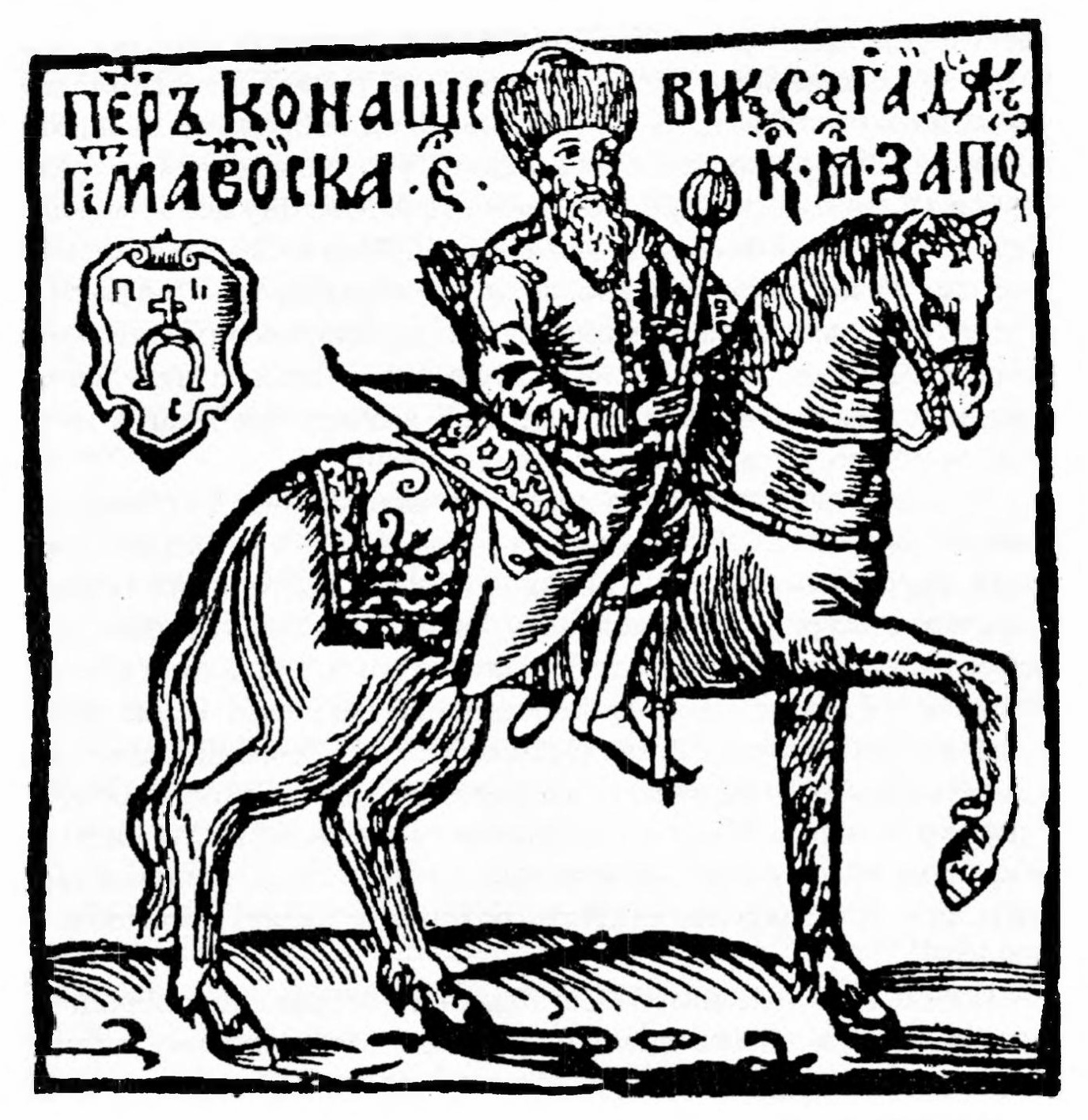
Petro Konashevych-Sahaidachny (Ruthenian: Петръ Конашевич Сагайдачный; Ukrainian: Петро Конашевич-Сагайдачний; Polish: Piotr Konaszewicz-Sahajdaczny; born c. 1582 – 20 April 1622) was a political and civic leader and member of the Ruthenian nobility, who served as Hetman of Zaporozhian Cossacks from 1616 to 1622. During his tenure, he transformed Zaporozhian Cossacks from irregular military troops into a regular army and improved relations between the Cossacks, the Orthodox clergy and peasants of Ukraine, which would later contribute to the establishment of a modern Ukrainian national consciousness. A military leader of the Polish–Lithuanian Commonwealth both on land and sea, Sahaidachny is best known for the significant role his troops played in the Battle of Khotyn against the Ottoman Empire in 1621, as well as the Polish Prince Władysław IV Vasa's attempt to usurp the Russian throne in 1618. The Zaporozhian Cossacks under his leadership were more efficient at fighting the Ottoman Empire than such major European powers as the Republic of Venice and Habsburgs. Sahaidachny reportedly took part in 60 battles without losing a single one. In 2011 Sahaidachny was canonized by the Orthodox Church of Ukraine as a Right-Believing hetman. On 20 April 2022 he was further declared by Epiphanius of Kyiv to be patron saint of the military forces of Ukraine.
Source: OpenStreetMap contributors (ODbL). Geographic data via OpenStreetMap.