 TributeLegacy
Memorial · Kyiv
СУ-122
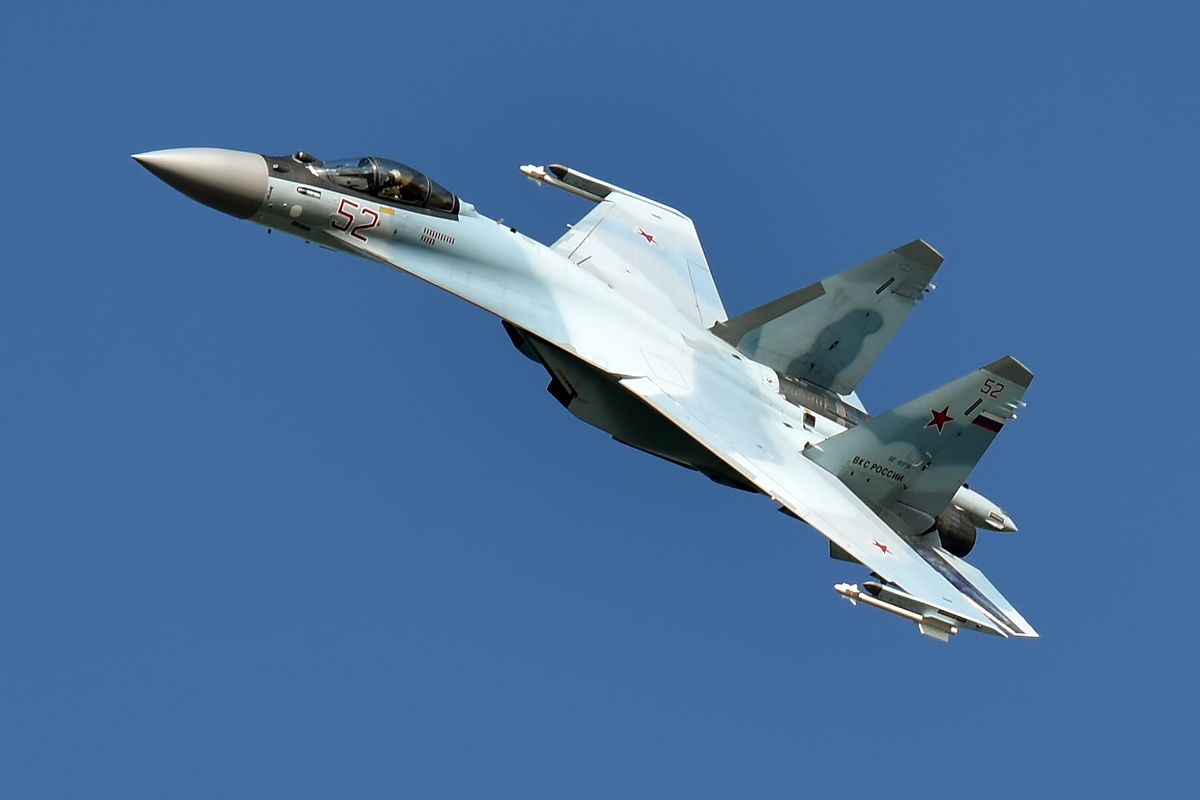
The Sukhoi Su-35 (Russian: Сухой Су-35; NATO reporting name: Flanker-E/M, occasionally nicknamed "Super Flanker") is the designation for two improved derivatives of the Su-27 air superiority fighter. They are single-seat, twin-engine, supermaneuverable, 4.5 generation air superiority fighters, designed by the Sukhoi Design Bureau and built by Sukhoi. The type was originally developed by the Soviet Union from the Su-27 and was known as the Su-27M. It incorporated canards and a multi-function radar giving it multi-role capabilities. The first prototype made its maiden flight in June 1988. Following the dissolution of the Soviet Union, Sukhoi relabeled it Su-35 in hopes of attracting export orders. Fourteen aircraft were produced and used for tests and demonstrations; one example had thrust-vectoring engines and was in turn redesignated the Su-37. A sole Su-35UB two-seat trainer was also built in the late 1990s that resembled the Su-30MK family. In 2003, Sukhoi embarked on a second "deep" modernization of the Su-27 to serve as an interim export aircraft awaiting the development of the Sukhoi PAK FA (Su-57) program. Also known as the Su-35, this version incorporates technology from the PAK FA program and has a redesigned cockpit and weapons-control system and features thrust-vectoring engines in place of the canards. The type made its first flight in February 2008.
Source: OpenStreetMap contributors (ODbL). Geographic data via OpenStreetMap.