
Monument · Havana
Alma Mater
d. 1920
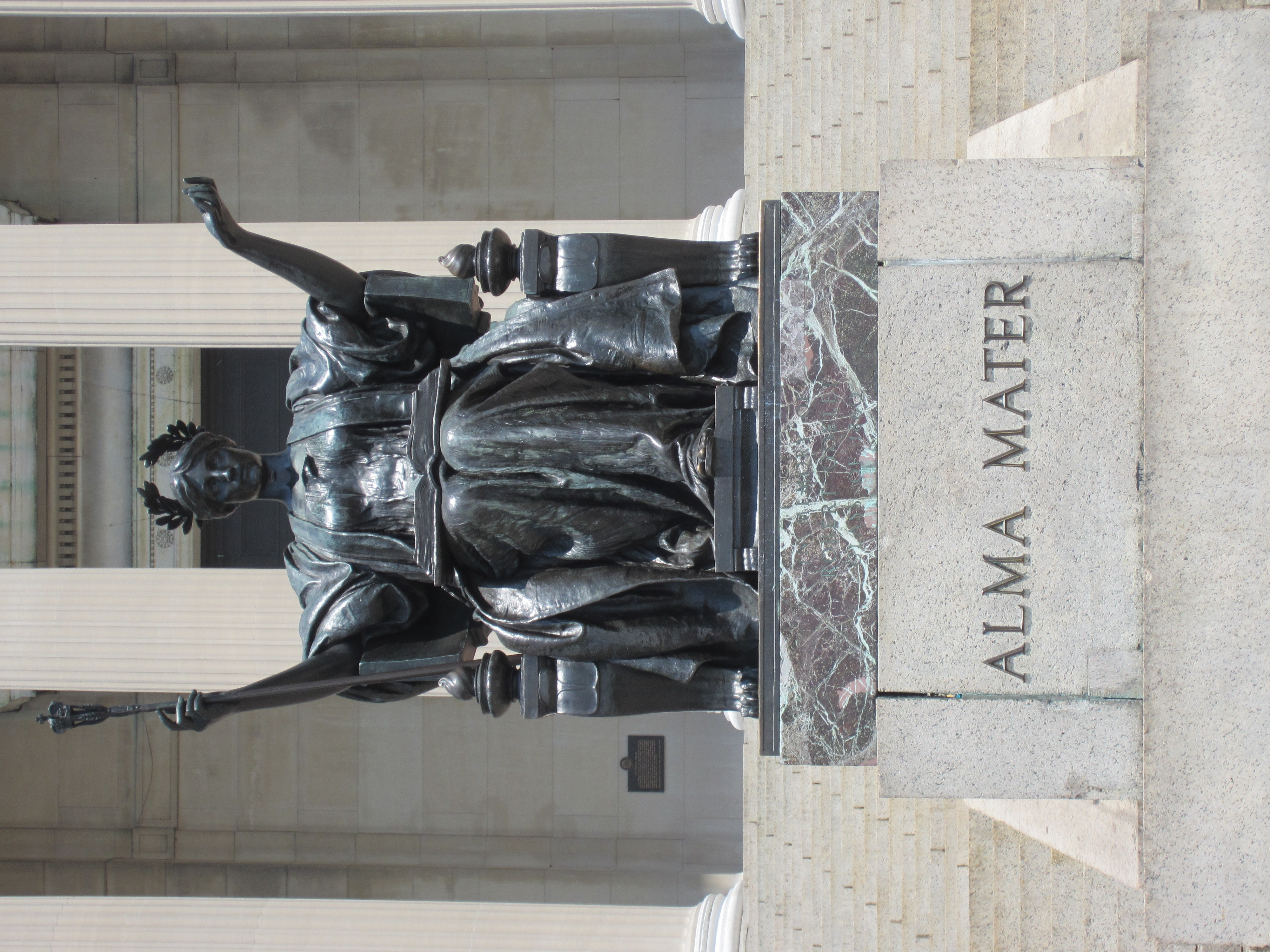
Alma mater (Latin: alma mater; pl.: almae matres) is an allegorical Latin phrase meaning 'nourishing mother'. It personifies a school that a person has attended or graduated from. The term is related to alumnus, meaning 'nursling', which describes a school graduate. In its earliest usage, alma mater was an honorific title for various mother goddesses, especially Ceres or Cybele. Later, in Catholicism, it became a title for Mary, mother of Jesus. By the early 17th century, the nursing mother became an allegory for universities. Used by many schools in Europe and North America, it has special association with the University of Bologna, whose motto Alma Mater Studiorum ("nurturing mother of studies") emphasizes its role in originating the modern university. Several university campuses in North America display artistic representations of Alma Mater, depicted as a robed woman wearing a laurel wreath crown. The earliest and of these is the bronze Alma Mater statue at Columbia University, designed in 1901 by Daniel Chester French. In the US the term alma mater is often used to describe a school song.
Source: OpenStreetMap contributors (ODbL). Geographic data via OpenStreetMap.