WAR MEMORIALwar memorial · England
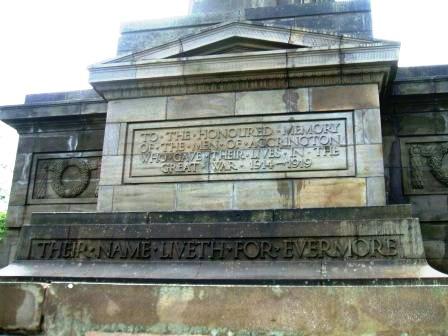
This Monument is Erected in Grateful Memory of the Men of this Parish Who Fell in the Great War 1914-1918 Their Name Liveth For Evermore
Click to remember them. Lest we forget.

This monument stands as a tribute to the men from this parish who lost their lives during the Great War, which took place from 1914 to 1918. It serves as a permanent reminder of their sacrifice and is intended to ensure their names are remembered through the generations. The creation of such memorials was a significant movement across communities following the extensive losses of the conflict, providing a focal point for remembrance and reflection for those left behind. These pieces often became central to community mourning and commemoration.
The memorial originates from the period immediately following World War I, a global conflict that reshaped the early 20th century. Known also as the Great War, it spanned from 1914 to 1918 and pitted the Allies against the Central Powers across numerous fronts, primarily in Europe and the Middle East. This devastating conflict introduced new forms of warfare, including tanks and chemical weapons, and resulted in an unprecedented loss of life, with millions of military and civilian casualties. The widespread establishment of war memorials like this one reflected a collective societal need to honor the fallen and acknowledge the profound impact of the war on local communities and the nation as a whole, ensuring that the sacrifices made were publicly recognised.
This war memorial is situated in England and can be found by consulting OpenStreetMap for its exact location. As a site of remembrance, visitors are encouraged to approach with respect and a contemplative attitude. It stands as a public testament to local history and sacrifice, offering a quiet space for reflection on the lives commemorated. The memorial is easily accessible, allowing for personal visits to pay homage to those it honours, and serves as a tangible link to a pivotal moment in history.
Inscription
“This Monument is Erected in Grateful Memory of the Men of this Parish Who Fell in the Great War 1914-1918 Their Name Liveth For Evermore”
Background
George Herbert Tyson Smith (1883–1972) was an English sculptor born in Liverpool. He executed many works in the Liverpool and Merseyside area, in particular war memorials. He was the brother-in-law of fellow Liverpool sculptor Edward Carter Preston. Carter Preston designed the "Next of Kin Memorial Plaque" He was the uncle of the potter Julia Carter Preston. Tyson Smith's father was an engraver and lithographic printer. Tyson Smith attended Liverpool College of Art where he studied plaster and stone carving and clay modeling. He was taught drawing by Augustus John at the "Art Sheds". Tyson Smith was particularly interested in the early artistic works of Egypt and Greece. In the First World War, Tyson Smith served in the Royal Flying Corps. Tyson Smith set up his first studio in 1919 when he returned from war service and he moved into a larger studio at Bluecoat Studios in 1925.
Photographs



Images via Wikimedia Commons - click to view licensing & full resolution.
Source: OpenStreetMap. Geographic data via OpenStreetMap.