 TributeLegacy
black plaque · England
The Guild Chapel
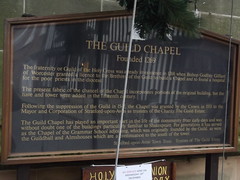
The Guild Chapel Founded 1269 The fraternity of Guild of the Holy Cross was already in existence in 1269, when Bishop Godfrey Giffard of Worcester granted a licence to the Brethren of the Guild to build a Chapel and to found a hospital for the poor priests in the diocese. The present fabric of the chancel of the Chapel incorporates portions of the original, but the nave and tower were added in the fifteenth century. Following the suppression of the Guild in 1547, the Chapel was granted by the Crown in 1553 to the Mayor and Corporation of Stratford-upon-Avon as trustees of the Charity: The Guild Estate. The Guild Chapel has played an important part in the lift of the community from early days and was without doubt one of the buildings particularly familiar to Shakespeare. For generations it has served as the Chapel of the Grammar School adjoining, which founded by the Guild, as were the Guildhall and Almshouses which are a continuation to the south of the tower.
Inscription drawn from imported open data, awaiting original TributeLegacy editorial.
Source: Open Plaques. Geographic data via OpenStreetMap.