
war grave · Commonwealth War Graves
Portsmouth Naval Memorial
d. 1924
Click to remember them. Lest we forget.
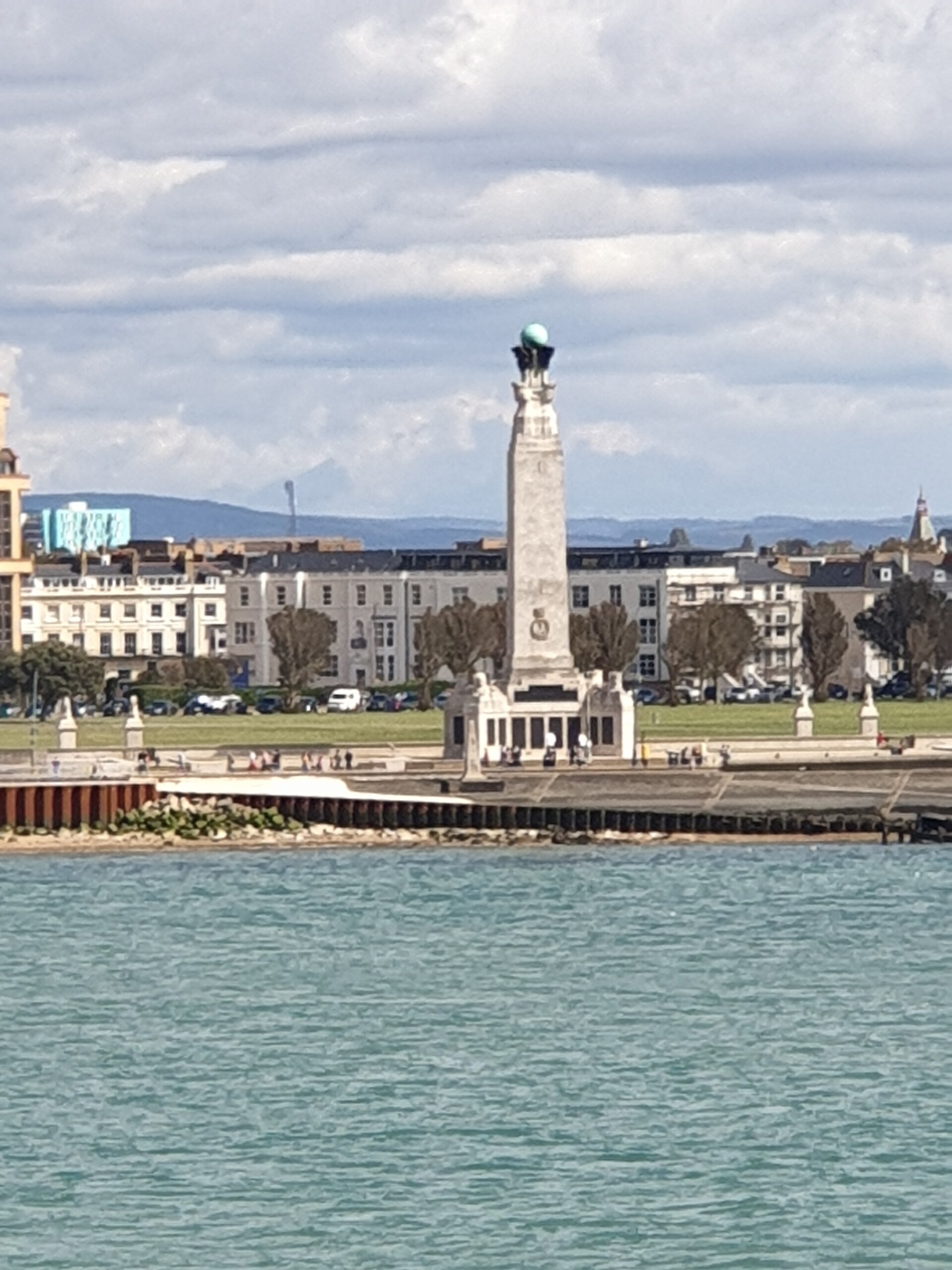
The Portsmouth Naval Memorial, also known as the Southsea Naval Memorial, stands as a significant tribute in Portsmouth, Hampshire. It commemorates approximately 25,000 British and Commonwealth sailors who lost their lives in the two World Wars and have no known grave. This includes around 10,000 sailors from the First World War and 15,000 from the Second World War. The memorial features a central obelisk adorned with bronze plaques, where the names of the fallen are inscribed, arranged by their year of death. It was part of a larger initiative to honour sailors lost at sea, with identical memorials also erected in Chatham and Plymouth.
The memorial originates from an Admiralty committee recommendation to commemorate naval personnel lost at sea during the First World War, an era defined by global conflict between 1914 and 1918. This period, known as the Great War, saw significant advancements in weaponry and resulted in millions of casualties. The memorial was later extended to include those lost during the Second World War, a conflict that lasted from 1939 to 1945 and involved nearly all the world's nations. This subsequent war, even deadlier than the first, was marked by unresolved tensions from World War I and the rise of fascism. The Portsmouth Naval Memorial stands within the tradition of honouring military personnel who made the ultimate sacrifice.
Situated on Southsea Common, beside Clarence Esplanade and positioned between Clarence Pier and Southsea Castle, the Portsmouth Naval Memorial is maintained by the Commonwealth War Graves Commission. This prominent structure of Portland stone features a central obelisk topped with a metal finial. Visitors can ascend steps to a plinth where bronze inscription plaques bear the names of the lost. Each corner of the base projects as a buttress, surmounted by a reclining lion statue. The memorial was designated a listed building in 1972 and was upgraded to Grade I in May 2016, offering a respectful site for reflection.
The Portsmouth Naval Memorial, sometimes known as Southsea Naval Memorial, is a war memorial in Portsmouth, Hampshire, England, on Southsea Common beside Clarence Esplanade, between Clarence Pier and Southsea Castle. The memorial commemorates approximately 25,000 British and Commonwealth sailors who were lost in the World Wars, around 10,000 sailors in the First World War, and 15,000 in the Second World War. The memorial features a central obelisk, with names of the dead on bronze plaques arranged around the memorial according to the year of death. To commemorate sailors who had died at sea in the First World War and had no known grave, an Admiralty committee recommended building memorials at the three main naval ports in Great Britain: Chatham, Plymouth, and Portsmouth. Identical memorials at all three sites were designed by Sir Robert Lorimer, with sculpture by Henry Poole. A separate memorial in Lowestoft commemorates the lost from the Royal Naval Patrol Service; the Fleet Air Arm is commemorated in Lee-on-the-Solent; and merchant seamen are commemorated at the Liverpool Naval Memorial and the Tower Hill Memorial in London. The Royal Naval Division War Memorial is on Horseguards Parade in London. The memorial is made of Portland stone, with a prominent central obelisk topped by a metal finial. Steps lead up to a plinth bearing bronze inscription plaques fixed to the obelisk's base bearing the names of the lost. Each corner projects as a buttress, surmounted by a statue of a reclining lion, beneath a stepped base to the obelisk.
Photographs

Images via Wikimedia Commons - click to view licensing & full resolution.
Source: Commonwealth War Graves Commission. Geographic data via OpenStreetMap.