
Memorial · Boston
Garden of Remembrance
This memorial, known as the Garden of Remembrance, offers a place for quiet reflection. The simplicity of its dedication suggests a broad intent to honour those whose memory is cherished, without specifying a particular conflict or event. It serves as a focal point for remembrance, inviting visitors to pause and contemplate its meaning within the urban landscape of Boston. Its presence provides a dedicated space for public commemoration.
The memorial is situated in Boston, a city with a rich historical tapestry that often includes various forms of public remembrance. Memorials in urban environments frequently act as civic markers, commemorating significant events, individuals, or collective experiences. Their creation often stems from community initiatives or established traditions of public commemoration, aiming to provide a lasting tribute and a place for reflection amidst daily life. This Garden of Remembrance fits into this broader tradition of city-based memorials designed for public access and personal contemplation.
The Garden of Remembrance is located in Boston, Massachusetts. As a memorial, it is intended for public access, providing a space for quiet contemplation and remembrance within the city. Visitors should approach the site with respect, mindful of its commemorative purpose. The precise setting or immediate surroundings are not detailed, but such gardens are typically found in accessible public areas, offering a serene environment.
Inscription
“Garden of Remembrance”
Background
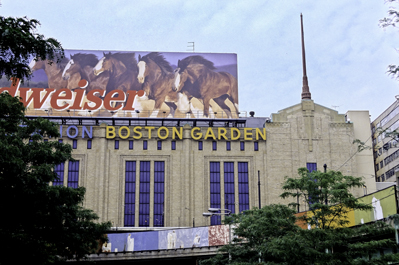
Dominating the skyline above Boston's North Station for decades, the Boston Garden was a celebrated venue that opened its doors in 1928. Intended as a major sporting and entertainment centre, it served as the home ground for the Boston Bruins and the Boston Celtics, echoing with the sounds of countless games. Beyond sports, the building hosted a diverse range of events, from lively rock concerts and boxing contests to grand circuses and ice spectaculars. It also provided a platform for significant public gatherings, including a notable political rally. The arena remained a central part of Boston's cultural life for seventy years before its demolition in 1998, three years following the opening of its modern replacement.
Original summary by TributeLegacy, informed by public sources.
Source: OpenStreetMap contributors (ODbL). Geographic data via OpenStreetMap.