
blue plaque · Birmingham
Austin Mini
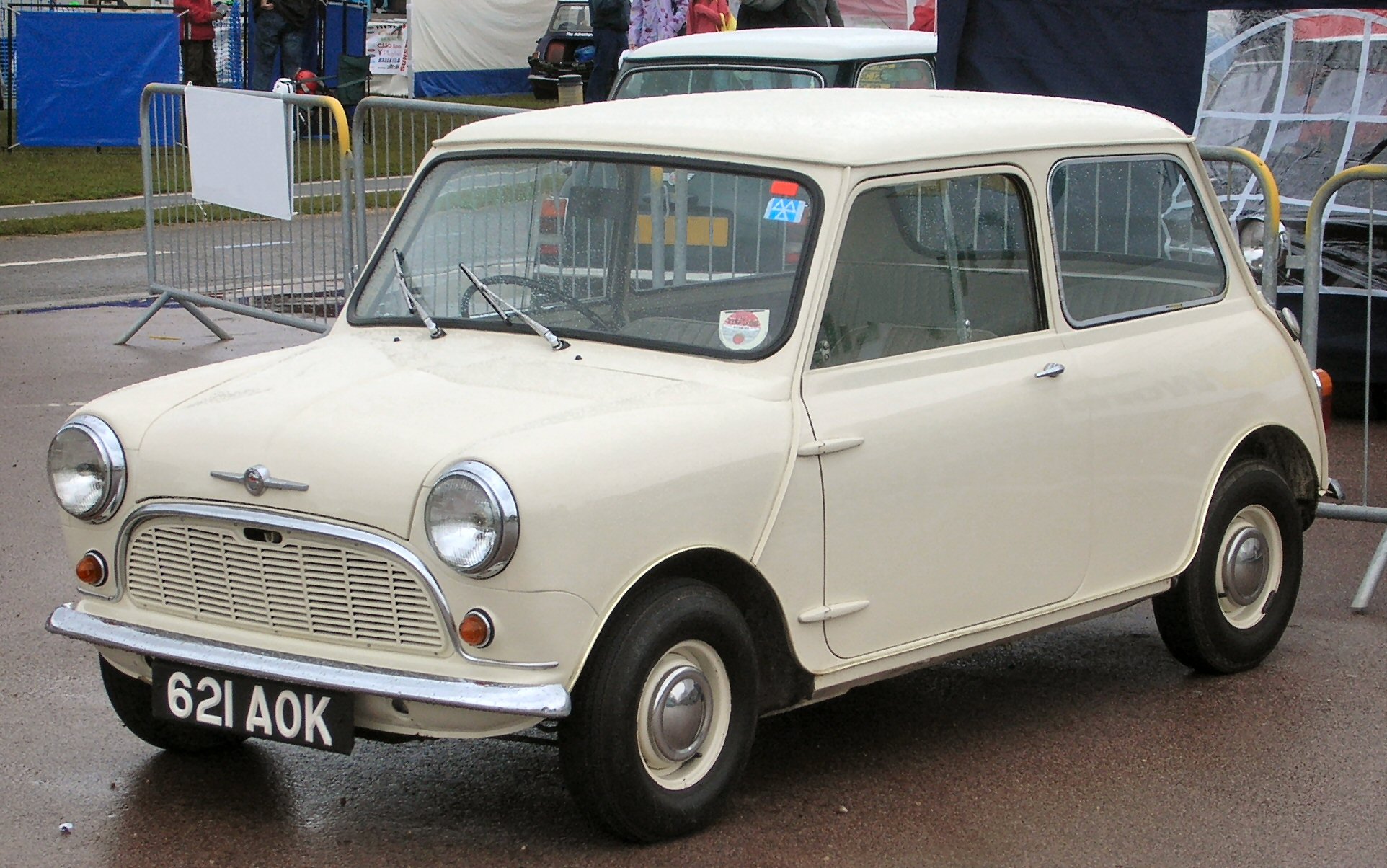
The Mini is a two-door, four-seat small car produced for four decades over a single generation, with many names and variants, by the British Motor Corporation (BMC) and its successors British Leyland and the Rover Group, and finally (briefly) under BMW ownership. Minis were built as saloons, estates, convertibles, and various other body styles. Minus a brief 1990s hiatus, from 1959 into 2000, an estimated 5.38 million of all variations combined were built, and the Mini's engines also powered another 2 million Mini Metros, though the Mini eventually outlasted its successor. Initially, the Mini was marketed under the Austin and Morris names, as the Austin Seven and Morris Mini-Minor; the Austin Seven was renamed Austin Mini in 1962 and Mini became a marque in its own right in 1969. Retrospectively, the car is known as the "Classic Mini" to distinguish it from the modern MINI family of vehicles produced since 2001 by German carmaker BMW, who took ownership of the Mini name following the sale of Rover Group in 2000. This distinctive two-door car was designed for BMC by Sir Alec Issigonis. Its space-saving transverse engine, integrated sump transmission, front-wheel drive layout – allowing 80% of the area of the car's floorpan to be used for passengers and luggage – influenced a generation of car makers. The front-wheel-drive, transverse-engine layout were used in many other "supermini" style car designs such as Honda N360 (1967), Nissan Cherry (1970), and Fiat 127 (1971). The layout was also adapted for larger subcompact designs. In 1999, the Mini was voted the second-most influential car of the 20th century, behind the Ford Model T, and ahead of the Citroën DS and Volkswagen Beetle.
Source: Open Plaques. Geographic data via OpenStreetMap.