
Memorial · Amsterdam
Mozes Hes
This memorial commemorates Mozes Hes, born in 1903, marking a spot significant to his life in Amsterdam. It records his involvement in resistance activities, leading to his arrest in 1941 and subsequent detention in what was known as the 'Oranjehotel'. The plaque further details his deportation on April 10, 1942, and his execution on June 4, 1943, in Berlin-Tegel. Such memorials serve as poignant reminders of individual lives impacted by historical events, ensuring that personal stories of courage and sacrifice are not forgotten.
This type of memorial stone belongs to a wider tradition of remembrance, particularly for victims of persecution during wartime. They are often placed in the pavement outside the last known voluntary residence of individuals who were arrested, deported, and ultimately killed. These small, brass-plated cubes, set into the street, provide a direct, physical connection to the person commemorated and their former home. They emerged from a desire to return names and identities to those who were victims of state-sponsored violence, often in an attempt to erase their existence. This specific stone relates to the period of the Second World War.
This memorial is a Stolperstein, a brass plaque set into the pavement, indicating the last known address of Mozes Hes in Amsterdam. Visitors will find these small, understated memorials embedded in the urban landscape, often along public footpaths. As it is situated within the public domain, it is accessible at all times, inviting quiet contemplation by those passing by. The precise street address in Amsterdam is not specified beyond the city name, though such stones are typically found directly outside the buildings they commemorate.
Inscription
“HIER WOONDE MOZES HES GEB. 1903 IN VERZET GEARRESTEERD 1941 'ORANJEHOTEL' GEDEPORTEERD 10-4-1942 GEFUSILLEERD 4-6-1943 BERLIJN-TEGEL”
Background
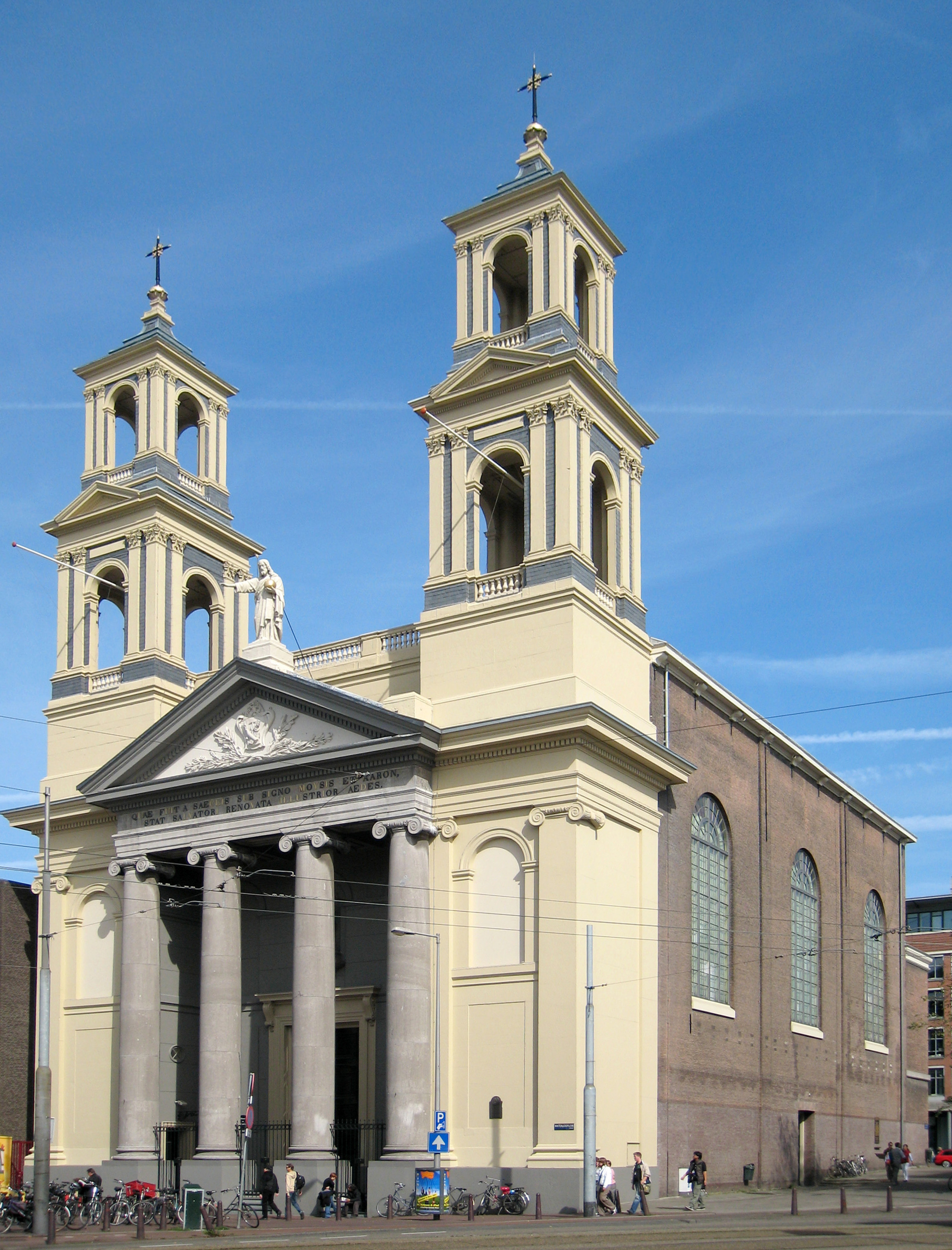
The Moses and Aaron Church (Dutch: Mozes en Aäronkerk, pronounced [ˈmoːzəs ɛn aːˈʔaːrɔŋkɛr(ə)k]) in the Waterlooplein neighborhood of Amsterdam, the Netherlands, is officially the Roman Catholic Church of St. Anthony of Padua (Dutch: Sint-Anthoniuskerk). Originally a clandestine church, it was operated by Franciscan priests at a house on Jodenbreestraat ("Jewish Broad Street"), where the wall tablets of Moses and Aaron hung on the wall. In 1970, the present church was designated as a Cultural Heritage Monument (Rijksmonument) of the Netherlands.
Source: OpenStreetMap contributors (ODbL). Geographic data via OpenStreetMap.